Every child develops communication skills at their own pace. While some children begin speaking early, others may take a little longer. However, Speech and Language Delay can occur when a child is not meeting expected speech and language milestones for their age. It is important not to ignore these early signs, as timely identification and professional speech therapy can make a significant difference in your child’s communication, learning, social interaction, and overall development.
What Is Speech and Language Delay?
Speech delay is a condition in which a child’s speech and language skills develop more slowly than expected for their age. A child with speech delay may have difficulty pronouncing words, forming sentences, or expressing thoughts clearly. In some cases, speech delay may be associated with hearing loss, developmental disorders, neurological conditions, or other underlying factors.
Early Signs of Speech and Language Delay
Parents should consider seeking professional advice if their child:
- Does not respond consistently to their name by 12 months of age.
- Has not started using meaningful words by 18 months.
- Cannot combine two words into simple phrases by the age of two.
- Has difficulty understanding simple instructions.
- Relies mainly on gestures instead of spoken words.
- Has unclear speech that is difficult for family members to understand.
Recognizing these signs early allows children to receive the support they need during the most important stages of language development.
The Connection Between Hearing and Speech
Hearing plays a vital role in speech and language development. Children learn to speak by listening to the sounds and words around them. Even mild hearing loss can affect speech development.
If your child frequently asks for repetition, does not respond to sounds, or seems unaware of voices, a comprehensive hearing evaluation should be performed. Identifying hearing problems early allows for timely intervention, helping children develop better communication skills.
How Speech Therapy Helps
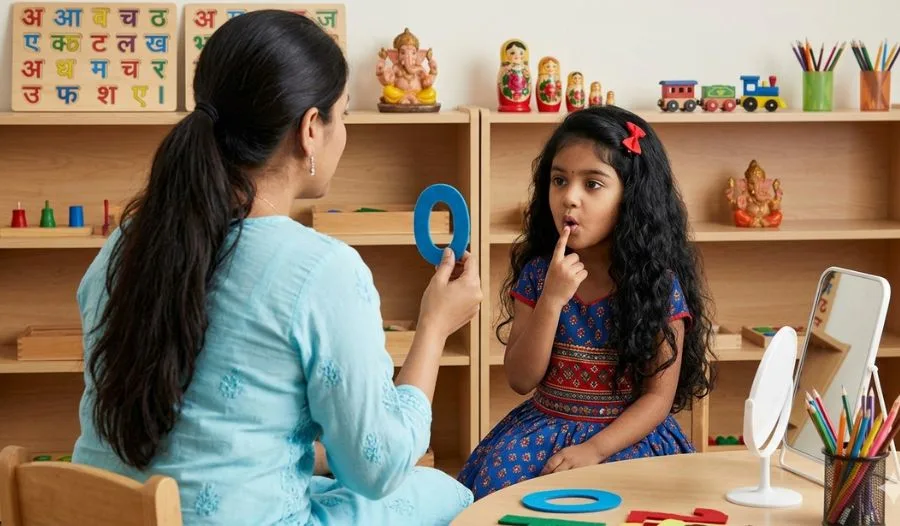
Speech therapy is designed to improve a child’s ability to communicate effectively. A qualified Speech-Language Pathologist creates an individualized treatment plan based on the child’s specific needs.
Speech therapy may focus on:
- Improving speech clarity and pronunciation
- Building vocabulary and language skills
- Enhancing listening and comprehension
- Developing social communication skills
- Increasing confidence in everyday conversations
Therapy sessions are engaging, interactive, and tailored to help children achieve meaningful progress.
How Parents Can Support Speech Development at Home
Parents play a crucial role in their child’s communication journey. Here are a few simple ways to encourage speech development:
- Talk to your child regularly throughout the day.
- Read storybooks together and discuss pictures.
- Encourage conversations during playtime.
- Limit excessive screen time.
- Give your child enough time to respond during conversations.
- Celebrate every communication milestone, no matter how small.
Consistent support at home, combined with professional therapy, often leads to the best outcomes.
Why Early Intervention Is Important
The earlier speech and language challenges are identified, the more effective therapy can be. Early intervention helps children develop stronger communication skills before they enter school, improving academic performance, social interactions, and self-confidence.
Delaying assessment may make it more difficult for children to overcome communication challenges later in life.
Why Choose SoundCare Speech & Hearing Centre?
At SoundCare Speech & Hearing Centre, we are committed to providing compassionate, evidence-based care for children and adults with speech, language, and hearing concerns. Our experienced professionals use modern assessment techniques and personalized therapy programs to help every individual achieve their communication goals.
Whether your child needs speech therapy, a hearing assessment, or ongoing hearing care, our dedicated team is here to support your family’s journey toward better communication and improved quality of life.